What to do when your tooth gets knocked out? (Knocked out tooth = avulsed tooth)

What to do when your tooth gets knocked out? (Knocked out tooth = avulsed tooth)

REMEMBER: Proper emergency action can save the tooth so that it can be replanted successfully and last for years to come.

lllllll.jpg

1.     Find the tooth. If your tooth got broken try to find all the pieces as they can sometimes be bonded together. 

2.     Very IMPORTANT! Pick up the tooth by the crown (chewing surface). Do not scrape the tooth as you may remove the living tissue on the root. If you want to transport it to your dentist the best would be to store it and keep it moist in a container with your own or someone else’s saliva or milk. Do not let it dry and do not wrap it in a tissue or cling wrap.

3.     You can try to reinsert the tooth into the socket. If you want to do it you should use only water to gently rinse off any dirt. (Do not use soap or chemicals!) Use gentle but firm pressure till the tooth sits in the right position. You can bite on gauze or cotton ball to keep it in that position.

4.     If you are unable to perform step 3 please take your tooth to the nearest dentist as soon as possible and they will do it for you. It's best to see the doctor within 30 minutes; however, it is possible to save a tooth even if it has been outside the mouth for an hour or more.

kiojhgff.png

Questions:

Can a knocked out tooth be put back in?

When a tooth has been knocked out, the nerves, blood vessels and supporting tissues are damaged, too. The nerves and blood vessels can't be repaired. That is why all avulsed teeth will need a root canal. However, the bone can reattach to the root of the tooth once it's put back into place

Why put a tooth in milk when it falls out?

Milk is a good medium for storing knocked-out teeth because cells from the root surface don't swell up and burst as they do when placed in water.

Can a dentist glue a broken tooth?

Dental Filling or Bonding. If you have chipped off just a small piece of tooth enamel, your dentist may repair the damage with a filling. If the repair is to a front tooth or can be seen when you smile, your dentist will likely use a procedure called bonding, which uses a tooth-colored composite resin.

Can a wobbly tooth heal itself?

But with new technology and expertise, your dentist is more likely than ever to be able to save your loose permanent tooth. Hoping that your tooth will heal on its own is probably not an effective strategy for dealing with a loose permanent tooth.

Can a dead tooth come back to life?

Nanofilm could bring dead teeth back to life. ... While the root canal procedure has a high success rate, it still leaves a dead tooth in the mouth. That could be about to change, however, with scientists reporting development of a nano-sized dental film that may bring diseased teeth back to life.

What to eat when I get my new dentures?

When you receive your first dentures eating can be a bit of a challenge to start with. Give yourself time to heal (if you had extractions done) and don’t expect too much at the very beginning. But don’t give up either: persevere and continue wearing your dentures. If you are getting both upper and lower denture you might need to eat in front of a mirror. The trick is to distribute food evenly on both sides and chop it rather then chew like you used to do with your natural teeth.

dentures hhh.jpg


These are some of the foods that you should be able to eat as suggested by existing denture wearers (basically anything soft):

-       mashed potatoes

-       yoghurt

-       mac n cheese

-       soups pureed in a food processor

-       overcooked past

-       pancakes

-       scrambled eggs

-       protein shakes

-       cheesecake

-       cottage cheese

- ice-cream

-       puddings

Xylitol - a cure for caries?

The addition of xylitol to your oral products can help reduce the likelihood of dental caries as well, giving you extra defenses against tooth decay. Xylitol has been studied for over 40 years and has been shown to inhibit the growth of the bacteria that causes dental caries and to reduce the acid that causes the cavities. This is because the main cavity causing bacteria, Streptococcus mutans, cannot metabolize xylitol and therefore can’t grow, and if the dietary sugars are replaced by xylitol there is no acid production.

It is recommended consuming five to seven grams total of xylitol per day, spread out through several servings, to reap these benefits. Without making changes to your usual routine, you can easily incorporate the necessary xylitol. Instead of using a regular toothpaste, floss, or mouthwash, make the easy switch to xylitol based products and you won’t even have to think twice about getting enough xylitol into your daily routine.

2018-11-19 10.04.49.jpg


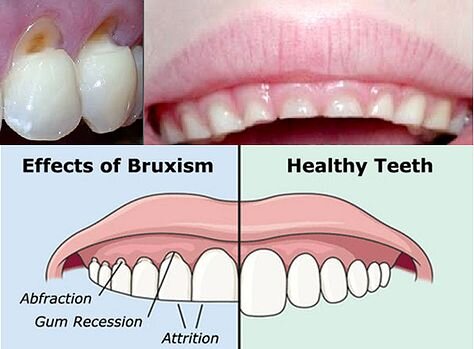
Bruxism - clenching or grinding of teeth

Bruxism commonly known as grinding of teeth can be easily solved by wearing a nightguard at night. Please call DenturePoint if you need one custom made.

Some of the problems when you grind and clench include:

Headaches, jawpain and/or ear pain, achingteeth, especially upon waking, stiffness of the face and temples upon waking, pain and or stiffness in the jaw when #chewing, clenching the jaw when experiencing feelings of anxiety, anger or stress , sensitivity of teeth, especially when experiences changes in temperature, tooth enamel that is chipped or broken, loose teeth.

10C35141-510B-4C95-90E1-C1B47CED9E57.jpeg